General News
5 April, 2025
Leslie Ernest Ziersch
Leslie Ernest Ziersch was born in Horsham on December 8 1923 to Ernest Ewald and Bertha Magdalena Ziersch of Eudunda, Goyer South Australia.
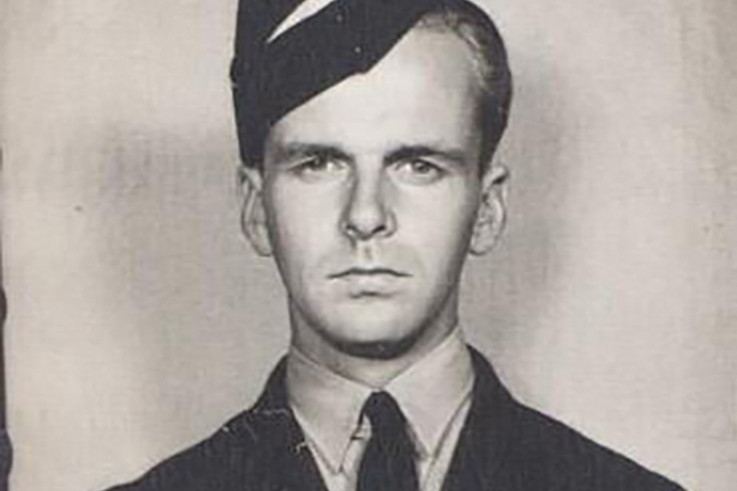
Leslie was schooled at St John private school Eudunda, Eudunda Higher Primary School, Concordia College in Unley and Adelaide High School.
He enlisted on June 20 1942 in RAAF.
His service number was 417690.
Leslie gained the rank of flight sergeant.
His last unit was No190 Squadron RAF.
His training began at 4 Initial Training School (ITS), then 2 Air Observer’s School (AOS) on October 15 1942.
From there he trained at 2 Bombing and Air Gunnery School (BAGS) and 2 Air Navigation School (ANS), then transferred to 4 Embarkment Depot (ED) on April 1 1943.
Leslie was sent to 2ED on April 20 1943.
Leslie sailed from Brisbane on May 5 1943, arriving in the United Kingdom on July 7.
His trades proficiencies were LAC Aircrew 1 on November 21 1942, LAC Aircrew 2 on January 3 1943, sergeant navigator on April 1 1943, and flight sergeant navigator on November 9, November 19 and December 31 1943.
He was posted to 11 Personal Despatch and Receiving Centre RAAF Brighton, UK, on July 8 1943.
Leslie served at 10 Observers Advanced Flying Unit, Dumfries (10 (O) AFO) on September 28 1943.
He was transferred to 297 Squadron on November 9.
This unit was equipped with Armstrong Whitworth Albemarle Aircraft and also practised parachute drops with 8 Battalion.
Leslie was posted to 297 Squadron, then 299 Squadron which had Short Stirling aircraft.
On December 22 1943 Leslie transferred to 1665 conversion unit, also flying Stirling 1/11/IV aircraft from June 1943 to January 1944.
This unit was based at RAF Wool Fox Lodge; Rutland, UK.
Leslie was transferred to 190 Squadron on February 8 1944.
Flight Sergeant Leslie Ernest Ziersch, navigator and bomb aimer, was killed in an air combat incident.
The Stirling with its crew, LJ822, took off from RAF Fairford, Gloucestershire, on the night of April 11–12 1944, detailed to carry out a special operations night flight.
The aircraft crashed at 23.09pm on April 11 at Knighton Farm, Ham Preston, near Wimborne, Dorset, England.
The aircraft dived into the ground and burst into flames on impact, killing all the crew.
Leslie was 20 years of age.
He is buried at Brookwood Military Cemetery, Pirbright, Surrey, England, in Grave 24, D 9-11.
His name is commemorated at the Adeliade World War II Wall of Remembrance, on Panel 133 Australian War Memorial Roll of Honour, at Eudunda War Memorial and on the Highgate Concordia College World War II Honour Board.
No 190 Squadron when formed in February 1943 and was a flying boat squadron in Coastal Command, flying anti-submarine patrols over the North Atlantic.
It disbanded on January 1 1944.
On January 5 1944, No 190 was reformed at Leicester East as an airborne forces squadron.
In March 1944 the squadron took part in a number of large-scale glider exercises flying 179 glider-towing flights before moving forward to Fairford on March 25.
On March 31 1944 they commenced SOE drops out of Tarrant Rushton.
Training and SOE drops continued during 1944 while 190 Squadron worked up its role in the Normandy landings (known as Operation ‘Overlord’).
At 23:30pm on June 5 1944, 190 Squadron supplied 23 Stirlings carrying paratroopers of 5 Paratroop Brigade in phase II of Operation ‘Tonga’ (each Stirling carrying 20 troops and their equipment).
No aircraft were lost.
They supplied 18 more aircraft for glider-towing in Operation ‘Mallard’ as reinforcement of 5 Paratroop Brigade.
Missions didn’t stop with D-Day and some crews barely touched down on June 6.
In July 1944, No 190 Squadron dropped 93 paratroops and operated on 11 nights in small-scale, very secret operations.
In August 1944, with SOE support activities, the squadron dropped 216 parachutists.
From September 17 to 23 1944 the squadron participated in sorties for operations ‘Market’ I, II, III, IV, V and VII.
It flew 98 sorties and suffered heavy losses due to anti-aircraft fire and enemy planes but accomplished its mission.
No 190 Squadron participated also in bombing operations.
The Rees raid supported Allied forces in Belgium.
Work continued for SOE during 1945, with most SOE operations being flown in Scandinavia.
In March 1945 No 190 Squadron made sorties for Operation ‘Varsity’, the crossing of the Rhine, involving 27 aircraft airlifting 318 troops from Great Dunmow.
In May 1945 for Operation ‘Doomsday’, No 190 Squadron carried Army units to Norway to disarm the German garrison.
On May 10 during ‘Doomsday’, three Stirling aircraft crashed in bad weather, killing their crews.
After a period of general transport duties with Stirlings (until June 1945) and later Hallifaxes, No 190 Squadron was renumbered No 295 Squadron on January 21 1946.
With thanks: Sally Bertram, RSL Military History Library. Contact Sally at sj.bertram@hotmail.com or call 0409 351 940.

