General News
9 August, 2025
VETERANS' VOICES: Leslie James Pianta
Leslie James Pianta was born on July 19 1920 in Murtoa, the son of James Peter Pianta and Ruby Violet Gertrude (born Tilker) Pianta.
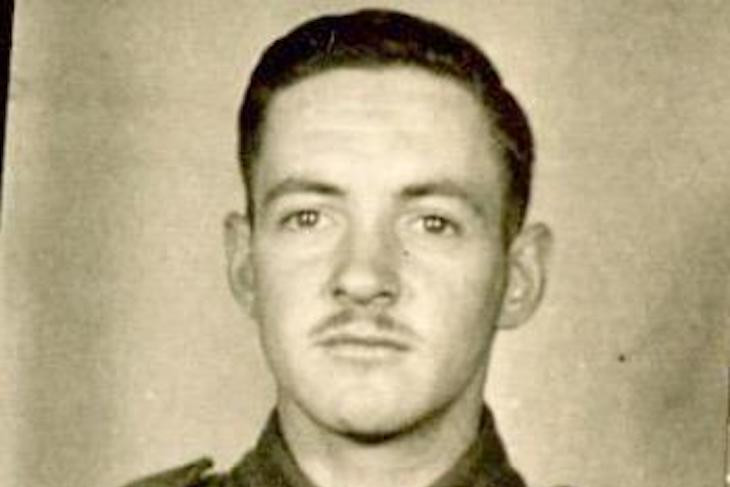
Leslie’s occupation before enlisting was plumber.
First service
Leslie enlisted on May 26 1941 at Horsham in the Citizens Military Forces (CMF).
He served from November 7 1941 to August 5 1942.
He was a trooper on enlistment and classified a CFN (craftsman).
His service number was V103765.
His unit was 5 Field D Squadron RAE.
Leslie was taken on strength on August 12 1941 at Bendigo.
On October 25 1941 he was transferred to a base hospital at Herne Hill, Geelong, with appendicitis, resulting him having an appendectomy.
Leslie had sick leave from November 17, rejoining his unit on December 19.
Leslie was taken on strength to 2 Field Squadron Bendigo.
Leslie again needed hospitalisation on January 13 and January 29 1942.
He was graded Spec GP1 Plumber on January 22.
He rejoined his unit from March 11.
Leslie hurt his tarsal bone and was evacuated to CDS Dandenong, then transferred to 107 CDB Broadmeadows, unfit due to a right foot injury, on April 27 1942.
He rejoined his unit on May 8 1942.
After taking leave, Leslie was transferred to 5 Australian Field Detachment Squadron RAE on July 28 1942 from 3 Field Detachment Squadron.
Second service
Leslie enlisted again on August 6 1942 at Puckapunyal, transferring from CMF to join the regular army.
He was allocated service number VX 83680.
His locality was Quantong.
Leslie’s next of kin was his sister Eileen Ward of Horsham.
On his marriage, his wife Jessie became his next of kin.
Leslie was 20 years and 10 months of age.
He served in the AIF from August 6 1942 to January 16 1946, actively serving for 1532 days – the majority in Australia and 216 days overseas.
Leslie served in Morotai between May 22 1943 and November 23 1945.
Leslie was taken on strength from 5 Field Squadron, RAE, and transferred to 2/9 Battalion Australian Army workshops on November 18 1943.
Leslie sailed for Brisbane aboard Duntroon on September 10 1944.
He disembarked in Townsville on September 13 1944.
Leslie was taken on strength to 315 Australian Light Aid Detachment on September 27 1944, transferring from 5 Field Squadron, RAE.
Leslie was twice evacuated to hospital with otisis mMedia on January 15 and January 22 1945 to the same hospital.
There was a further evacuation, Leslie transferring to 112 Base Hospital then to 106 Australian Stationary Hospital on March 1 1945.
He rejoined his unit on April 12 1945.
Leslie embarked from Cairns on LST454 on May 22 1945, serving overseas from May 22 to December 23 1945 in Borneo and Moratai.
On December 15 1945 Leslie transferred to Victorian Line of Communication Area L & D District.
Leslie disembarked in Brisbane on December 23 1945.
He was discharged on January 16 1946.
His posting on discharge was 315 Australian Light Aid Detachment.
Leslie received the Pacific Star, the War Medal, the Australian Service Medal and the Return of Active Service Badge.
Leslie died on February 7 1994.
He is buried in Horsham Cemetery in plot South 2-1-6.
The 315 Australian Light Detachment was listed as being in North Queensland and at Narellen, New South Wales, in April 1944 before disbanding at the end of June 1944, at which time its personnel were reassigned to other AEME units.
Light aid detachment squadrons
A light aid detachment is an attached independent minor unit of the Royal Electrical and Mechanical Engineers, Royal Canadian Electrical and Mechanical Engineers, Royal Australian Electrical and Mechanical Engineers, or Royal New Zealand Army Logistic Regiment, operating as a sub-unit of the supported unit.
These units provide dedicated logistic support to every field unit of the Australian Army, British Army, Canadian Army or New Zealand Army.
RAEMESTRALIAN ELECTRICAL AND MECHANICAL ENGINEERS (RAEME)
Royal Australian Electrical and Mechanical Engineer (RAEME) soldiers, called craftsmen, repaired and maintained equipment as diverse as tanks, trucks and armoured personnel carriers, helicopters, radios, radars and computers, artillery, and missile systems.
The wide range of trades available in the corps includes vehicle mechanics, electronics technicians, aircraft technicians and armament fitters.
LST 454 landing craft
USS LST 454 was commissioned on January 25 1943.
At that time the crew consisted of seven officers and 49 enlisted sailors.
As the ship took on a more significant role, its crew grew to more than 200 men.
LST 454 spent most of its active duty in the southwest Pacific, taking part in 13 invasions and many resupply missions.
After the war the efforts of USS LST 454 and its extraordinary crew were recognised with eight Battle Stars and credit for shooting down one enemy plane.
With thanks: Sally Bertram, RSL Military History Library. Contact Sally at sj.bertram@hotmail.com or call 0409 351 940.

